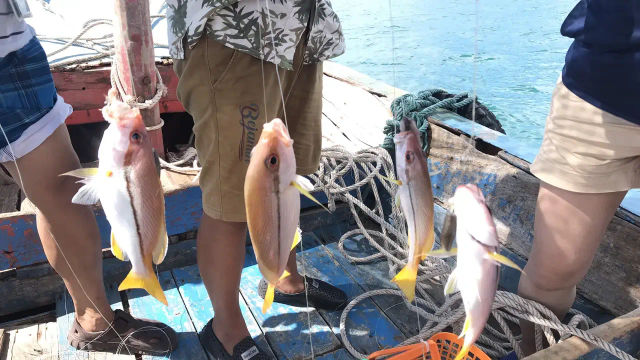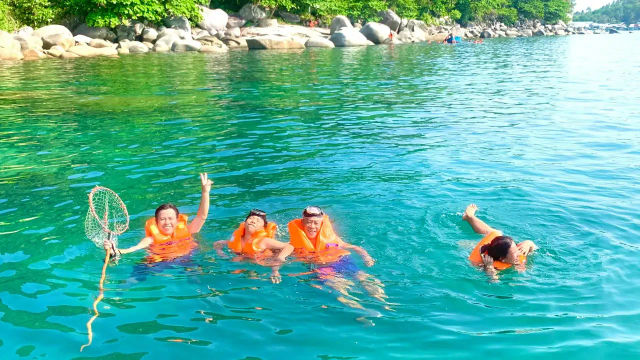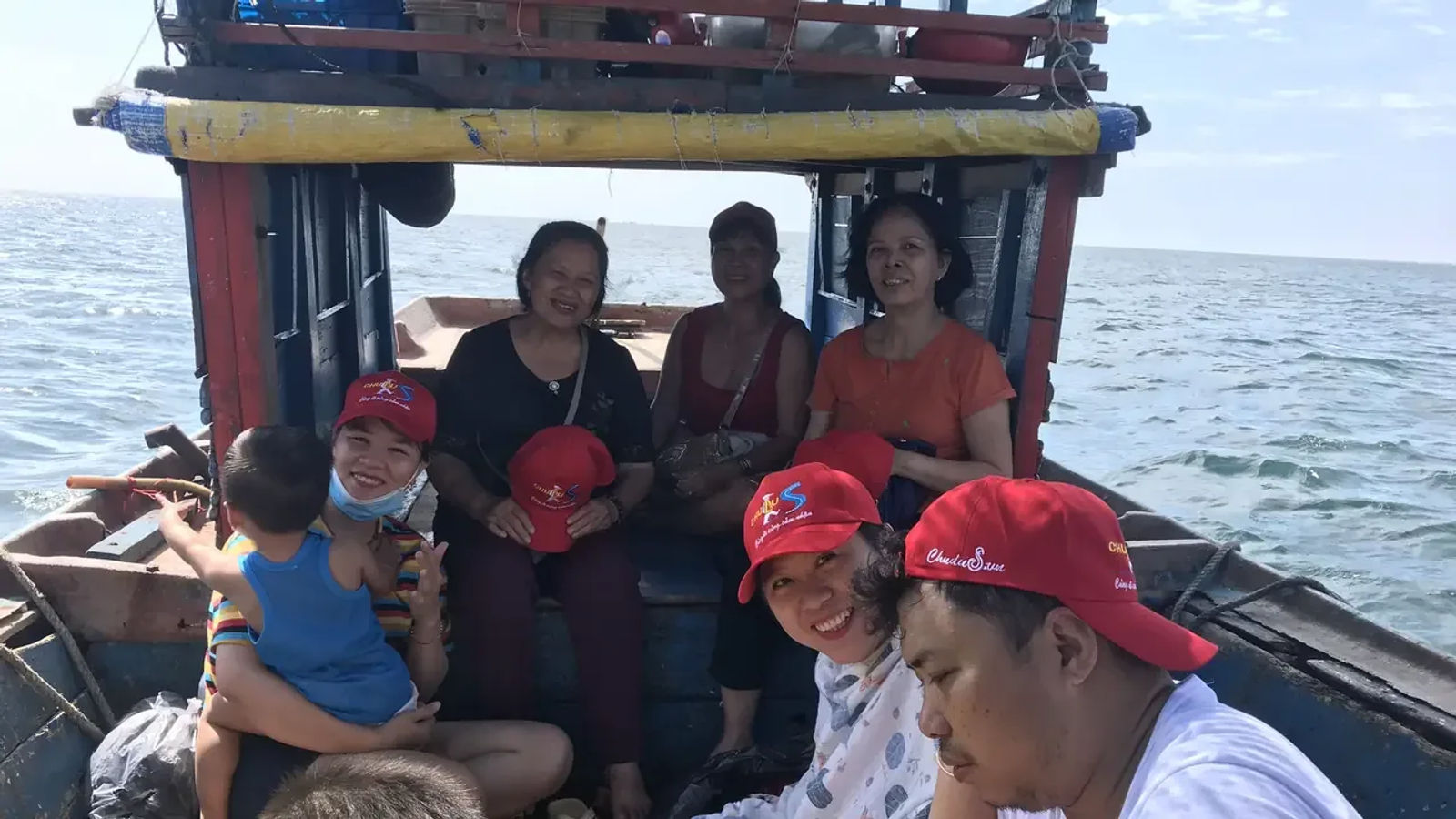
Put your face into the water at Nam Du and you will find a whole garden beneath the sea: colourful corals growing close together, parrotfish gliding around, crabs, clams and sea snails clinging to the reef, and shoals of small fish darting past. This archipelago off Rach Gia still has many living reefs, although not every spot remains intact. Below are some tips to make your snorkelling trip both beautiful and safe, and to keep the reefs there for those who come after you.
SNORKELLING: EASIER THAN YOU THINK
Most visitors to Nam Du view the coral by floating on the surface. You put on a life jacket, a mask and a snorkel, then let yourself float; simply look down and the reef appears right below you. Masks, snorkels and life jackets are usually provided on the boat.
Because the reefs are close to shore and the water is shallow, this is suitable even for first-timers. If you are not a confident swimmer, you can still enjoy the view with peace of mind thanks to your life jacket and a guide close by. Those more at home in the water can swim a little further out to find denser patches of coral, as long as they stay within sight of the guide.
WHY CHOOSING THE RIGHT SPOT MATTERS
Group tours often stop at a few familiar spots such as Hon Dam, Hon Bo Ao, Hon Han or Hon Hai Bo Dap. A few years ago the reefs here were healthy and full of fish, but growing visitor numbers have damaged many areas.
The usual culprits are visitors standing or treading on the reef because no one reminds them, plus boats dropping anchor right at the edge of the coral. That is why a small boat or private speedboat with a guide who knows the waters is worth more: they know which reefs are still healthy and where to anchor properly.
ISLETS WORTH ASKING ABOUT
- Ba Hon Nom: little known, with dense, colourful coral, parrotfish, crabs and clams; above the water the scenery is still wild, and large seabirds sometimes fly past.
- Hon Gam Ghi: local guides say there are still some beautiful patches of living coral, though not every boat takes visitors to the right place.
- Hon Tre: people who have snorkelled here say the reef is lovely and full of fish, with clams and sea snails too.
- Hon Hai Bo Dap: a deserted island nicknamed Robinson Island, with shallow water and a rocky seabed, handy for swimming and pitching a tent overnight; part of the reef has been affected, so let your guide choose where to enter the water.
- Hon Han: a regular stop for many tours, so ask beforehand about the current condition of the coral.
Coral changes from year to year. Local guides always know best which spots are still worth seeing today.
WHEN TO GO
The dry season, from around mid-November to May, is when the water is clearest and the sea at its calmest for snorkelling. Nam Du's weather is hard to predict, so even in the rainy season, on sunny, calm days you can still head out to see the coral.
SNORKELLING GEAR AND WHAT TO PACK
- Mask: try it on for a snug fit so water does not leak in.
- Snorkel: check it is securely attached to the mask and take a few test breaths while still on the boat.
- Fins: choose a size that fits so swimming is easy.
- Small bag: swimwear, a towel, a light jacket, drinking water and a waterproof pouch for your phone.
- Sun protection: a full-coverage swimsuit or long-sleeved top will save your back from burning when you float for a long time in the sun.
STAYING SAFE WHILE SNORKELLING
- Life jacket: wear it the whole time you are in the water, even if you are a strong swimmer.
- Weather: check the forecast before the day; if the sea is rough or storms are expected, reschedule.
- Guide: go with a guide or boat owner who knows the waters well and follow their instructions.
- Buddy: never snorkel alone; always have someone from your group nearby.
- Fitness: avoid going into the water straight after a big meal, when you are tired or while seasick.
PROTECTING THE CORAL REEFS
Do not stand on, tread on or touch the coral. Do not break off coral or collect marine life to take home, and do not feed the fish. Whatever rubbish you bring out, take back to the boat. Just a few small habits like these help Nam Du's reefs keep their beauty for future trips.
If you would like to visit the reefs by small boat with a local guide, message Đất Phú on Zalo or send a request with your travel dates and group size, and we will help plan your trip.