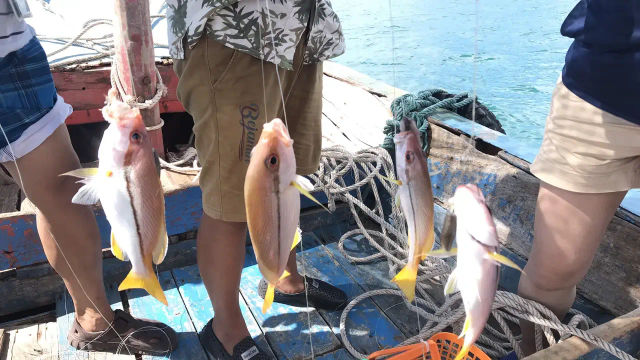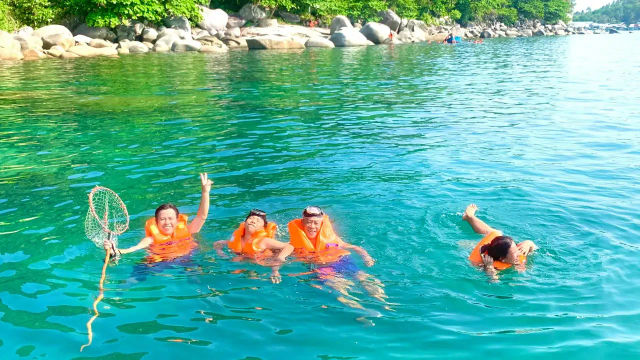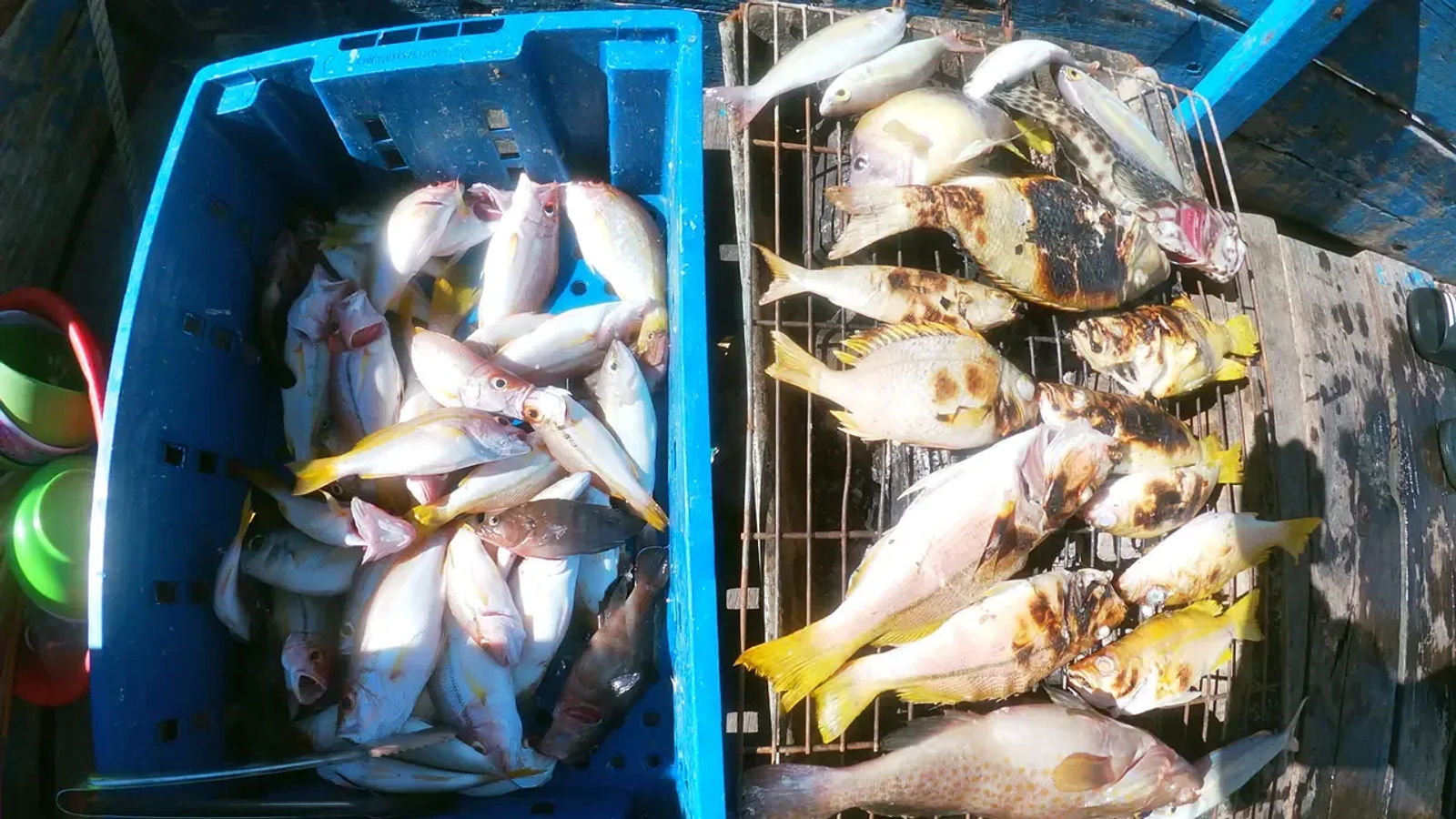
The Nam Du archipelago, about 83 km from Rach Gia by sea, is made up of 21 islands large and small clustered close together, so hopping from one to the next takes very little time. What delights many visitors is that almost every beach has a down-to-earth name with a story behind it. This article takes you around Hon Lon, introduces a few small islands worth the boat ride, and covers what to keep in mind when you go in the water.
THE STORIES BEHIND HON LON'S NAMES
Hon Lon is also known as Hon Cu Tron. According to local lore, when Emperor Gia Long fled to the island, his soldiers ran short of food. The islanders showed them a kind of round tuber that filled them up and did them no harm. From then on the island was named after the round tuber, and over time, in the way the old islanders spoke, the name softened into Cu Tron.
Following the front of the island, the beaches appear in the order locals usually name them: first Chet Beach beside the pier, then Khach, Tuong, Gieng, Co Lon, Co Nho, Soi, the small and large Cay Men beaches, then Da Chay Beach, Da Den Cape, Lum Tranh, Dat Do Beach and Da Trang Cape; last and furthest of all is Nhum Beach. Today many of these beaches are lined with houses and the grass or wells are long gone, but the old names still appear on house number plates, and each one describes the old landscape quite closely.
Chet Beach has its own legend too. It is said that long ago a few Chinese merchants trading in these waters met with disaster; their bodies washed up on the beach and the islanders buried them. Everyone tells a different version, so when you visit, ask around for fun.
WHICH BEACHES TO VISIT ON HON LON
- Cay Men Beach: a small sheltered cove with water as flat as a lake and coconut palms planted seventy or eighty years ago; the name may come from the men trees that once grew here, or from its being a place where sweethearts used to meet.
- Da Chay Beach: right next to Cay Men, covered in black boulders rising from the shallow water; up close the rock shows unusual bands of changing colour.
- Ngu Beach: on the west of the island, linked to the tale of Emperor Gia Long stopping here; some say the royal well has been filled in, others insist it still holds fresh water.
- Dat Do Beach: on the far side of the island, with bright red earth quite unlike the other beaches; it is also a seafood buying wharf, so you are likely to see fishermen at work.
- Doc An Tinh: a slope on the road up to the lighthouse, flanked by cogon grass and rose myrtle, with a view of Ngu Beach from the top; as it is the highest stretch of the road, ride slowly.
- The lonely tree: a single pine standing alone against a wide sky, for those who have seen all the famous beaches and want somewhere quiet.
- Nhum Beach: the furthest away and the hardest to reach, with a small fishing village and an unhurried pace of life.
TO THE NEIGHBOURING ISLANDS
- Hon Dau: sandwiched between Hon Bo Ao and Hon Dung, about half an hour by boat from Hon Lon or Hon Ngang. The beach has two parts: an inner area of shallow sand for swimming and an outer area of coral reef. Because larger boats must anchor offshore, visitors transfer to small dinghies to reach land. Here you can watch both sunrise and sunset.
- Hon Mau: one of the three most populated islands, covered in ancient coconut palms. Its beaches, Nam, Bac, Nom and Chuong, are named after the seasonal winds, so whatever the time of year one of them is at its best. At night, sit on the shore and watch the lights of the fishing boats twinkling out at sea.
- Hon Hai Bo Dap: two islands, one large and one small, linked by a strip of pebbles and rocks that looks like a dyke and appears or disappears with the tide. There is nowhere to sleep and no shops, so if you want to camp you must bring your own tent or hammock. The water is shallow with a rocky bottom, so there are plenty of fish and coral.
HOW TO SEE ALL THE BEACHES
On Hon Lon, ride a motorbike along the road around the island; there are steep slopes and sharp bends, so go slowly and avoid riding after dark. The best times to swim are early morning or late afternoon when the sun has softened. If you want to pick fresh seafood, get up early and head to the wharf to meet the fishing boats coming in. Over on Hon Mau you will meet warm, welcoming locals who may even offer you a freshly picked coconut.
Spend one day on the beaches close to each other on Hon Lon and the next day on a boat trip to the islands. That way you will not wear yourself out and still have time to sit and watch the sunset.
SAFETY AND LOOKING AFTER THE BEACHES
- Life jackets: always wear one on boats and dinghies, or when swimming beyond the shallows.
- Weather: check the forecast before heading to the more distant islands, and change your plans if the sea is rough.
- Locals: ask a boat owner or a guide who knows the waters to go with you to uninhabited islands or when swimming near rocky reefs.
- Coral: when swimming at Hai Bo Dap or Hon Dau, avoid standing or treading on the reef.
- Rubbish: take it back to the mainland or put it in designated bins; before breaking camp, clean up where you stayed.
- Residents: ask permission before photographing homes, boats or people at work.
To visit the beaches and islands above, contact Đất Phú via Zalo, phone or email for advice on boat schedules and accommodation.