Set in the East Sea, the Con Dao archipelago first brings to mind its rows of old prisons and Hang Duong Cemetery, reminders of a painful chapter the nation has lived through. Alongside that history are beaches that remain wonderfully unspoilt, deep green forests and crystal-clear water. This guide brings together what you need to know so your trip offers both quiet moments of reflection and the simple joys of island life.
THE BEST TIME TO VISIT CON DAO
Roughly March to September is considered the best period. Although this is already the rainy season, the sea is calm and the eastern and north-eastern islands see only light winds. Sunny days are plentiful, ideal for trips to the smaller islands, diving or photography. Afternoon showers are common, and you can use that time for the covered historical sites on the main island.
The north-east monsoon runs from October to March, when Con Son Bay can be very rough. On the other hand, the sea to the west and south-west of the main island stays fairly calm, so itineraries in this season usually shift to that side.
GETTING TO THE ISLANDS
- By air: direct flights to Con Son Airport.
- By sea: from Saigon, take an overnight coach to Tran De Port, then a high-speed boat of about 2.5 hours to Ben Dam Port.
Flight and ferry schedules change with the seasons, and Đất Phú will double-check them before booking for you. Bring your original ID card or a valid passport; children under 14 need a birth certificate. Foreign visitors should let us know early so Đất Phú has time to sort out the paperwork.
WHERE TO STAY
Most accommodation is concentrated in Con Son town, the island's centre, with everything from guesthouses and hotels to resorts. Staying centrally makes it easy to reach the historical sites, and in the evening you can stroll along the seafront. During holiday periods, remember to book early.
A JOURNEY THROUGH THE HISTORICAL SITES
With a guide by your side, you will gain a much deeper understanding of the story behind each place.
- Con Dao Museum: holds documents, photographs and artefacts telling the story of the prisoners held here during the two wars of resistance.
- Governor's Palace: once home to successive island governors, now an exhibition space displaying original artefacts.
- Phu Hai Prison: the oldest prison camp, built by the French colonial authorities, which still contains its solitary confinement cells and rice-milling chamber.
- French-built tiger cages: cells hidden among the prison blocks, laid out like a maze.
- American-built tiger cages: rows of cramped, damp concrete cells.
- Chuong Bo isolation area: part of the prison heritage complex and usually included on the visiting route.
- Hang Duong Cemetery: the resting place of the heroine Vo Thi Sau, Le Hong Phong, Nguyen An Ninh and many other patriots.
For many people, coming to Con Dao is a journey of remembrance, a way to pay tribute to those who fell on this land. By custom, visitors offer incense at the memorial and then visit the grave of Vo Thi Sau; many choose to come after dark. When you visit Hang Duong Cemetery and the other historical sites, dress respectfully, keep your voice low and maintain a solemn atmosphere.
TEMPLES, SHRINES AND LOCAL BELIEFS
- Phi Yen Temple: also known as An Son Temple, it honours a royal consort of Lord Nguyen Anh and is revered by islanders as one of the two goddesses who protect the island.
- Cau Temple: dedicated to Prince Cai, the son of Lady Phi Yen and Lord Nguyen Anh; it stands beside the trail leading down to Dam Trau Beach.
- Nui Mot Pagoda: formally named Van Son Pagoda, it sits on a hill about 60 m high, looking out over the whole town.
- Nam Co Shrine: on the southern island road, not far from Ben Dam Bay.
BEACHES AND SMALL ISLANDS
- Dam Trau Beach: an unspoilt beach linked to the legend of the betel and areca lovers; reached by a trail of about 1.5 km from the main road.
- Bai Nho: reached after a short walk through the forest, with a cool stream to bathe in.
- Lo Voi Beach: on the northern route of the island, with clear water and pleasant air.
- Bai Nhat: a strip of white sand that appears only at low tide.
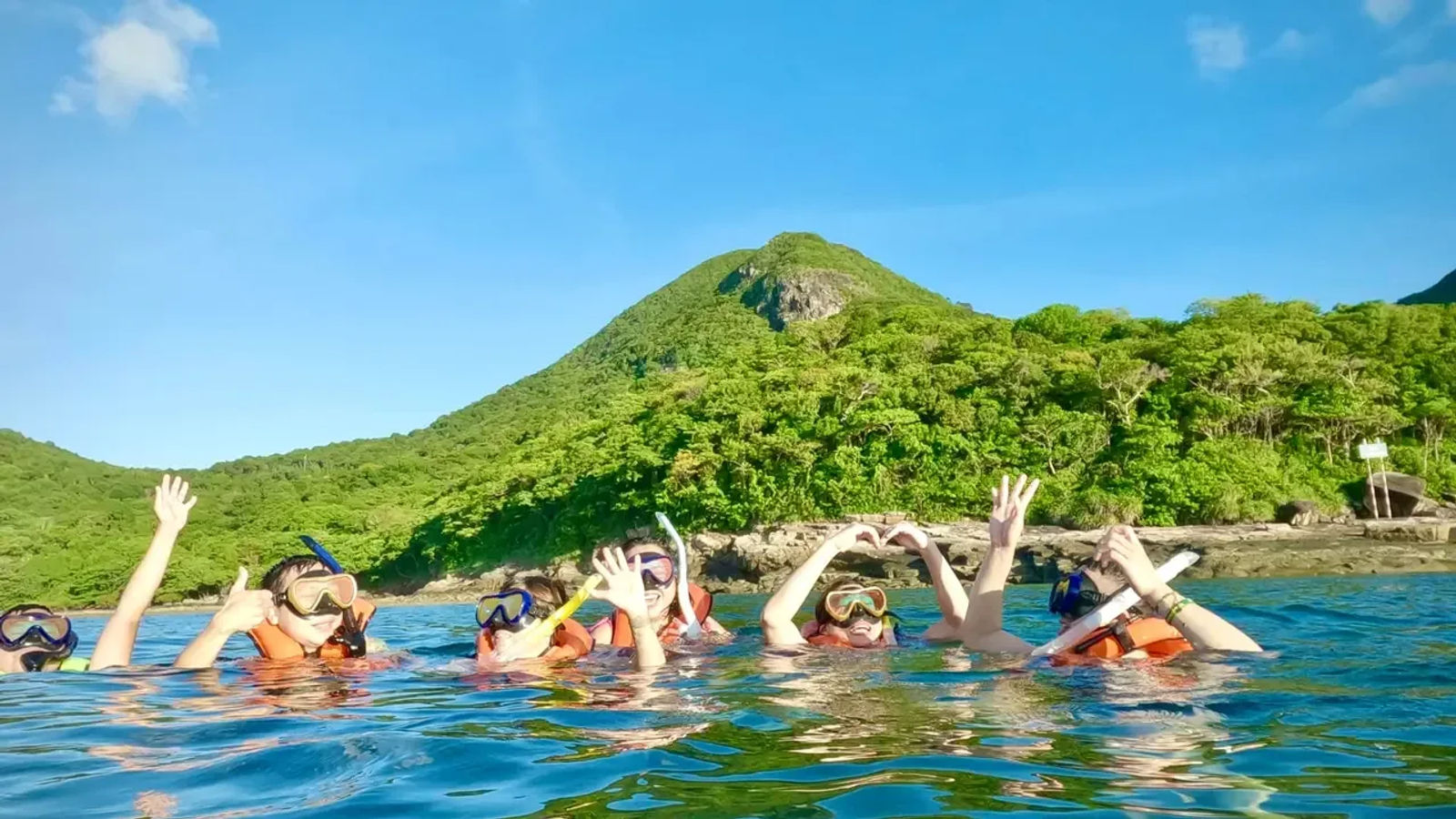
- Bay Canh and Hon Cau islands: take a speedboat out to swim, see coral, explore the mangroves and learn about sea turtle conservation; the trip also stops at Co Van Shrine and the ruins where the late Prime Minister Pham Van Dong was once held in solitary confinement.
Following the southern route towards Ben Dam Bay, you can admire Hon Tai, Shark Cape, Love Peak and the north-western coastal road.
PROTECTING SEA TURTLES AND THE OCEAN
Con Dao is a nesting ground for sea turtles, including the green turtle. In season, visitors may be able to watch hatchlings being released into the sea; the timing changes from year to year, so ask Đất Phú before you finalise your dates. When diving or walking in the protected area, follow your guide, avoid touching coral, do not disturb the turtles and take your rubbish back with you.
CON DAO CUISINE
Fresh seafood is always the top choice. Island meals often feature fish braised in a clay pot, steamed crab, shrimp and squid salad, fresh squid, and a plate of boiled vegetables dipped in mam quet, a local shrimp paste sauce. For gifts, head to Con Dao Market for local specialities, or choose Con Dao pearls.
To see Con Dao by night in a different way, have a look at our article on night squid fishing with Con Dao fishermen.
SAFETY AND TIDES
- During the north-east monsoon, Con Son Bay is rough and speedboat routes may be changed or postponed.
- Wear a life jacket for the whole time you are on a speedboat and while snorkelling.
- If you are prone to seasickness, take medication before boarding.
- Bai Nhat only appears at low tide, so keep an eye on the tide and do not wander too far.
- The walks to Dam Trau and Bai Nho pass through forest, so wear shoes with good grip.
- Before heading out to the small islands, check the weather forecast and go with a local.
SUGGESTED ITINERARY
For a first visit to Con Dao, three days and two nights is just right.
- Day 1: arrive and check in; in the afternoon visit the museum, Phu Hai Prison, the tiger cages and Chuong Bo, then visit Hang Duong Cemetery and Phi Yen Temple.
- Day 2: in the morning take a speedboat to Bay Canh and Hon Cau; in the afternoon choose either the northern or southern route of the island.
- Day 3: climb to Nui Mot Pagoda, stop at the market for local specialities, then return to the mainland.
With four days, you can cover both the northern and southern parts of the island.
Message Đất Phú on Zalo or send a request and we will help you choose flights or ferries, rooms and speedboat schedules to suit the season you travel.